Sudan Green Alliance
The Sudanese Green Alliance
is a coalition of environmental
and climate focused
organizations working
in Sudan
+
+
vision
A ddress the climate
related
environmental
damage that is
caused by armed
conflict, and to
strengthen the
resilience of
communities and
ecosystems affected
by both climate
change and conflict
in Sudan.
+
+
Mission
Promote post-war environmental recovery through science-based and community-driven projects, empower local communities to lead conservation efforts, and advocate for equitable and sustainable environmental practices

Who we are
The Sudanese Green Alliance is a coalition focused on post-conflict environmental recovery in Sudan, aiming to restore degraded ecosystems and protect the environment

Multi-Stakeholder Engagement
It brings together multiple stakeholders, including NGOs, activists, and local communities, to strengthen long-term ecological resilience in Sudan.
Sustainable Restoration Practices
The alliance promotes sustainable restoration practices to address post-war ecological challenges and ensure long-term environmental protection.
Collaborative and Inclusive Action
The alliance supports collaboration and inclusive participation, encouraging shared responsibility among stakeholders to achieve sustainable and lasting environmental recovery in Sudan.

Together for a Restored Environment and Stable Communities
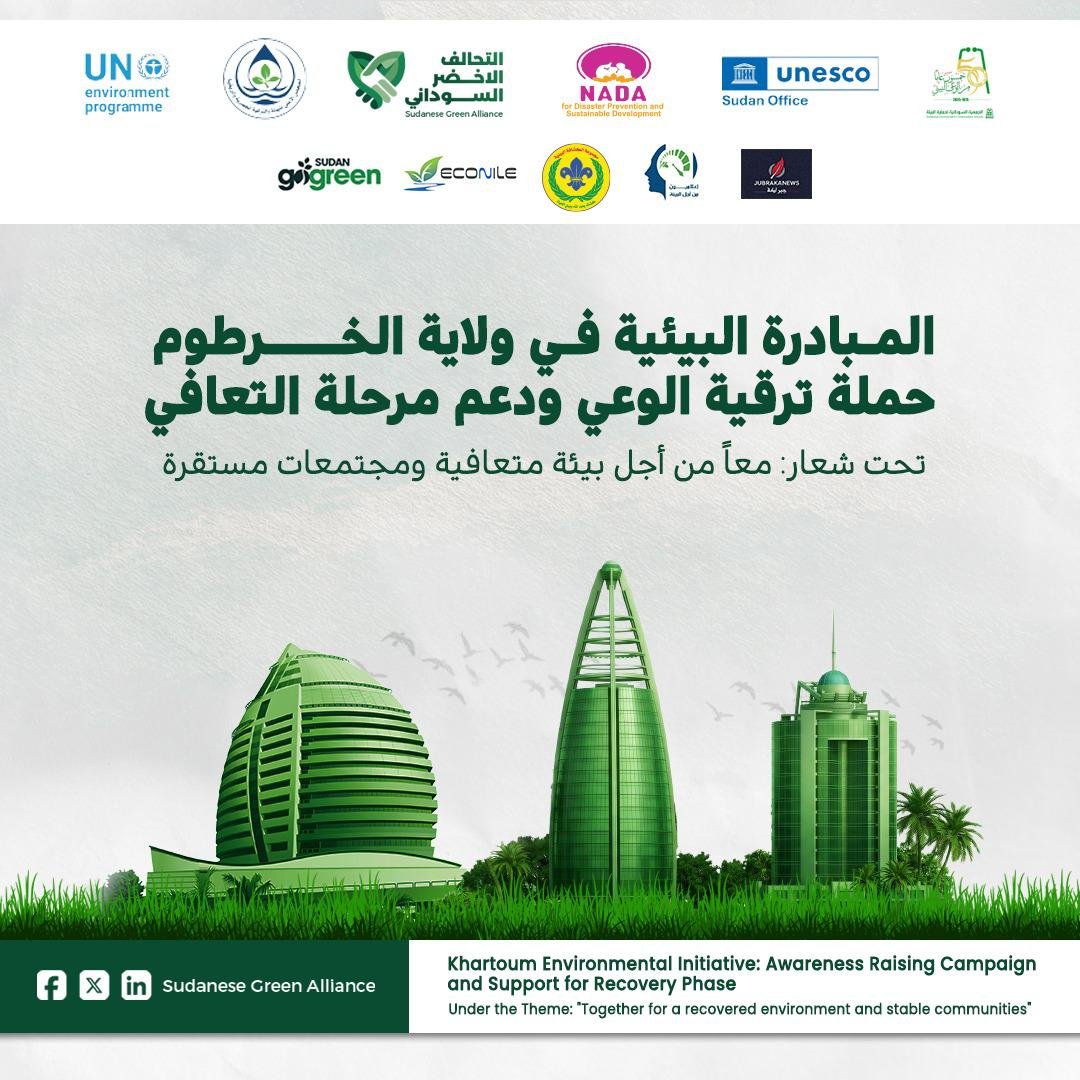
Under the slogan “Together for a Restored Environment and Stable Communities,” Khartoum State, in collaboration with the Reconstruction Committee and its partners from leading organizations, launches a comprehensive initiative aimed at enhancing environmental awareness and accelerating sustainable recovery. The efforts of the state align with partner organizations and dedicated volunteers in a national movement focused on rehabilitation, the activation of sustainable environmental sanitation systems, and the promotion of green awareness positioning citizens as genuine partners in rebuilding and development. Grounded in the firm belief that a healthy environment is the cornerstone of any true recovery, this initiative goes beyond restoring the city’s physical appearance. It seeks to embed a culture of sustainability as a fundamental pillar for community stability. The recovery of the land marks the first step toward restoring hope, and collective action today to protect our environment is the true guarantee of a greener, safer future for all.

Projects
- Environmental Observatory: A platform to monitor climate change impacts and environmental disasters.
- One Million Trees Initiative: Large-scale tree planting across Sudan.
- Smart Village Program: Promoting sustainable and climate-resilient rural communities
- Rehabilitation of Nature Parks: Restoring Dinder and Jabel Alhassania parks, along with urban forests.
- Capacity Building: Training and empowering 100 youth and women in environmental action
- Renewable Energy Projects: Installing solar panels in remote and underserved villages
- Small-Scale Clean Energy Projects: Supporting initiatives such as solar power systems and efficient cooking stoves.

Strategic Goals
Restore degraded lands (combat desertification, reforestation
Build community capacity through education and training
Improve water resource management (protect rivers, reduce pollution
Influence policies to integrate environmental recovery into reconstruction plans
Promote sustainable agriculture to enhance food security
Current Environmental Activities
- Tree Planting Campaigns: Planting one million trees across Sudan
- Community Awareness: Conducting workshops on climate change and waste management
- Small-Scale Projects: Supporting clean energy initiatives, including solar power and efficient cooking stoves.
- Environmental Damage Documentation: Documenting environmental damage caused by the war in Sudan.
- Rebuilding Roadmap Development: Building a shared understanding and roadmap for post-war environmental recovery
- Capacity Building: Strengthening the skills and capacities of local communities and stakeholders

Challenges
Limited funding and
equipment
Difficulty accessing conflict
affected regions
Low environmental awareness
in some communities